
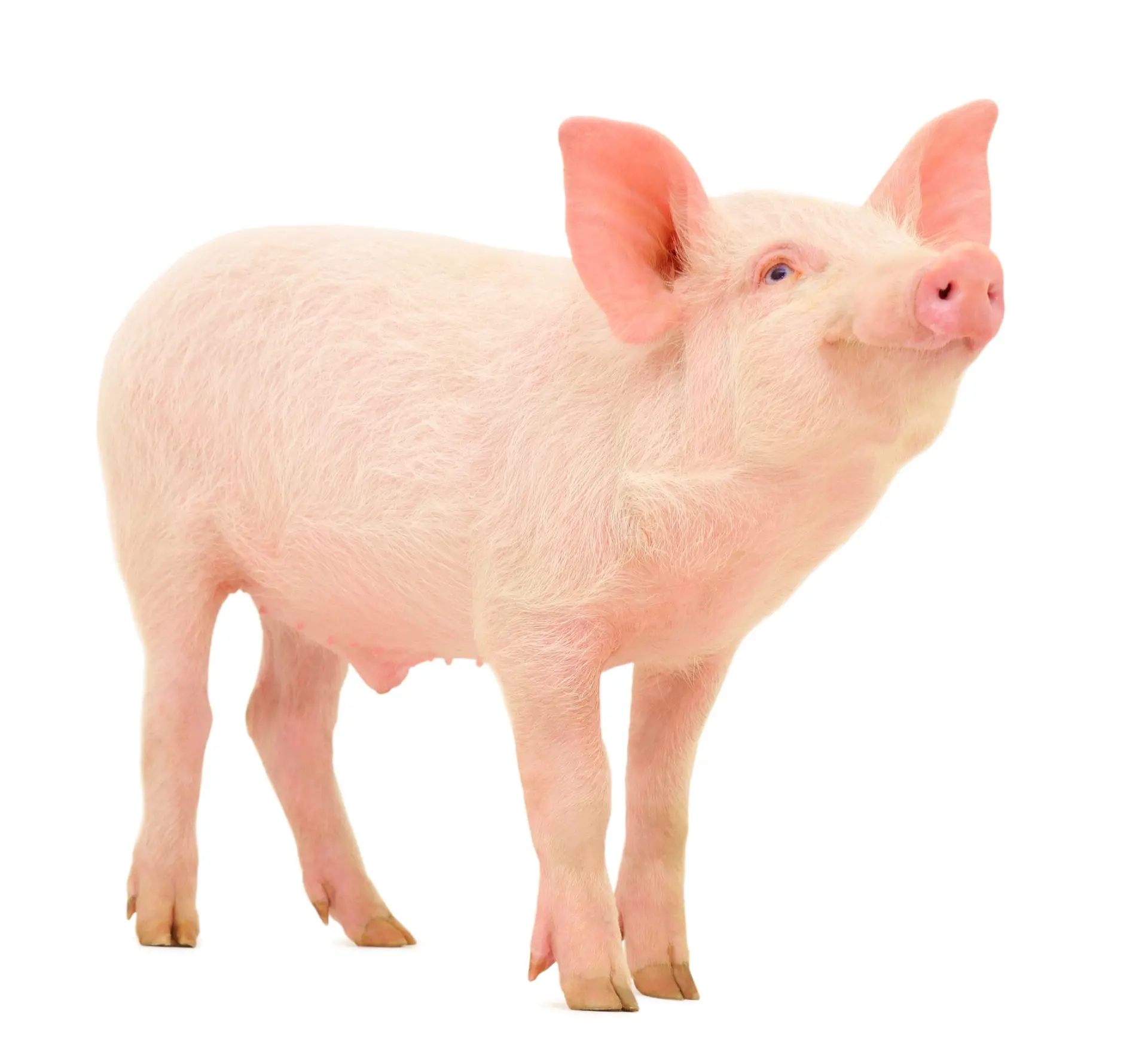
Protect the newborn start
Colostrum access, warmth, teat availability and close observation shape early survival and vitality. Weak or chilled piglets need prompt, trained attention within the farm health plan.
Contact us

Pig nutrition
From the first hours and weaning through growth, finishing and the breeding cycle, performance depends on stage-specific nutrition, effective intake and disciplined daily control.
The same diet cannot serve a newly weaned pig, a finishing group and a lactating sow equally well.
Greenagro connects digestive capacity, actual feed and water intake, ingredient quality, health, environment and the farm's production objective.
Operational focus points rather than fixed performance guarantees. Genetics, health, housing, ingredients and management determine the farm-specific targets.
Market-pig pathway
The programme develops with intake capacity and biological change. Weight and observed performance guide transitions more reliably than age alone.
Colostrum access, warmth, teat availability and close observation shape early survival and vitality. Weak or chilled piglets need prompt, trained attention within the farm health plan.
Fresh, palatable creep feed introduces the piglet to solid feed while sow milk remains central. Clean presentation and repeated small offerings help build familiarity before weaning.
Weaning combines dietary, social and environmental change. Digestible ingredients, familiar feed form, accessible water and a prepared pen help protect gut function and early growth.
As intake capacity increases, the programme balances energy, digestible amino acids, minerals and ingredient value against actual weight, health status and growth potential.
Late-phase nutrition connects feed efficiency, carcass quality and days to market. Phase changes follow measured weight and performance rather than a fixed calendar alone.
Four operating pillars
Nutrition, access, environment and health are managed as one production system.
Daily nutrient supply depends on what pigs actually consume. Feeder access, adjustment, flow and clean water come first.
Digestibility, ingredient quality, hygiene and health pressure are read together—especially around weaning.
Temperature, air, stocking, floor condition and competition influence appetite and effective nutrient intake.
Weight, gain, conversion, mortality, uniformity and feed cost show whether the programme works on this farm.
Nutritional challenges
Low growth or poor conversion may begin with nutrients, but it can also begin with water, feed form, feeder access, temperature or health.
Discuss your herdA fall in intake after weaning can quickly affect gut function and growth. Water, pen preparation and feed discovery are immediate priorities.
Energy, amino-acid contribution, digestibility and risk can change between grain and protein-source lots. Current specifications matter.
Energy and digestible amino acids must move together with intake and growth potential; crude protein alone does not define the programme.
Particle consistency, pellet quality, fines, feeder setting and waste can alter both intake and the economics of the formulated feed.
Temperature, air quality, stocking and disease pressure can change nutrient needs and suppress performance even when the feed is correct.
Gestation condition, lactation appetite and body-reserve loss influence milk output, piglet growth, recovery and the next reproductive cycle.
Breeding-herd pathway
Body condition and real nutrient intake must be followed across gilt development, gestation, lactation and recovery—not evaluated at farrowing alone.
Build sound growth and structural maturity without excessive condition; prepare the future sow for stable intake and longevity.
Manage individual or group access, body condition and controlled nutrient supply while supporting fetal and mammary development.
Protect water and feed intake as milk demand rises; connect sow appetite with litter growth and body-reserve change.
Review condition loss, health and weaning-to-service response before the next cycle begins.
Feeding programme
The final programme depends on animal weight and stage, measured intake, genetics, health, ingredient analyses, feed manufacture and the production target.
Palatable, highly digestible support for feed discovery and the earliest transition.
Phase-led nutrition designed around low intake, gut adaptation and rapid biological change.
Weight-led programmes balancing efficient gain, carcass objectives and ingredient economics.
Distinct support for gilt development, gestation, lactation, recovery and boar condition.
Exact recipes, nutrient specifications and inclusion decisions are developed for the selected ingredients, manufacturing process, herd status and production objective.
Performance dashboard
Consistent records connect a feed change with the response that follows. One clear, documented adjustment teaches more than several changes at once.
Vitality · pre-weaning growth · creep discovery · uniformity
Feed intake · water · manure · health · daily gain
Weight · gain · conversion · mortality · market spread
Condition · intake · litter growth · recovery · longevity
Ingredient lot · feed form · feeder setting · waste · delivery
Feed cost per kg gain · days to market · output per place
General stage structure informed by PIC Nutrition and Feeding Guidelines, the PIC Wean-to-Finish Manual, PIC Gilt and Sow Management Guidelines and university swine-nutrition guidance. This page does not replace ingredient analyses, farm-specific formulation, veterinary direction, product documentation or local requirements.
Greenagro expertise